
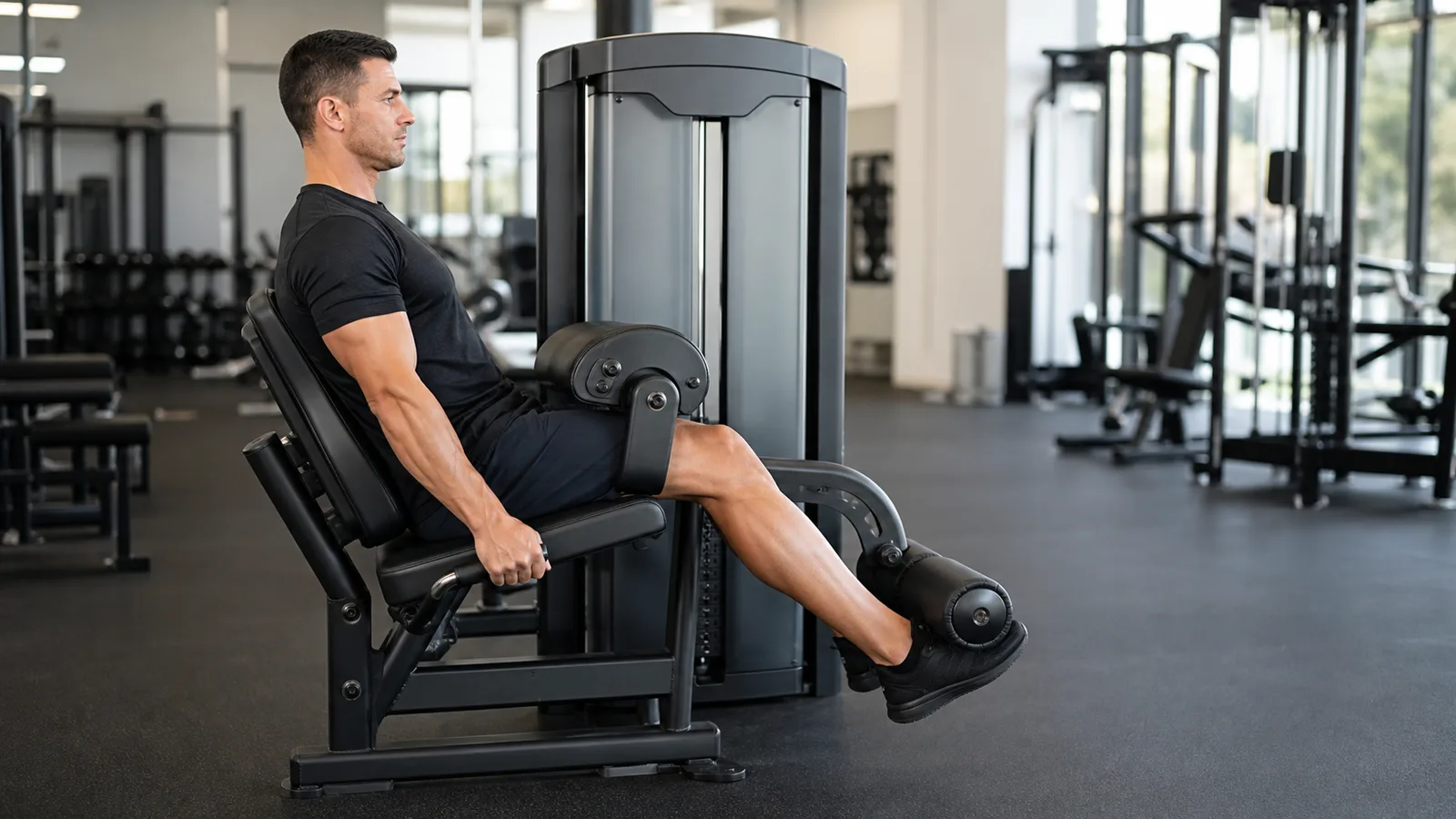
The seated leg curl trains knee flexion: pulling the lower leg back against resistance. Because your hips stay flexed, the machine places the hamstrings in a lengthened position while the pads stabilize your body. Correct setup matters more than copying someone else’s seat number.
How to set up a seated leg curl machine
Adjust the back pad so your knees line up closely with the machine’s pivot. Place the lower pad just above the heels rather than across the calves, and secure the thigh pad without crushing the legs. Use the handles to keep your hips and torso steady.
Choose a light starting load. Machine designs vary, so read the equipment label and ask gym staff when the pivot or adjustments are unclear.
| Adjustment | Target position | Why it matters |
|---|---|---|
| Seat and back | Knees close to the machine pivot | Reduces awkward joint tracking |
| Ankle pad | Above the heels | Creates a stable lever without sitting on the calves |
| Thigh pad | Snug over lower thighs | Helps keep the hips down |
| Range stop | Comfortable near-straight start | Avoids forcing the knees or hamstrings |
How to perform the seated leg curl
Brace gently and pull the pad down and back by bending your knees. Keep your hips against the seat and avoid throwing the torso forward. Pause briefly when the knees are comfortably bent, then return slowly until the hamstrings feel lengthened.
Do not slam the weight stack or let it pull you into the start. A controlled lowering phase makes the selected load more useful and easier to track.
Muscles worked and why knee flexion matters
The hamstrings cross the knee and help bend it; most also cross the hip and help extend it. A complete lower-body plan therefore benefits from both a curl pattern and a hip-hinge pattern such as a Romanian deadlift.
The gastrocnemius, a calf muscle that also crosses the knee, may assist. Foot angle changes are not a magic way to isolate one hamstring; use the position that feels stable and lets you control the repetition.
Sets, reps, and progression
Start with two or three sets of eight to fifteen repetitions, one or two times each week. Stop with one to three good repetitions still possible. If you complete the top of the range with the same setup and tempo, increase the machine by one small plate.
Write down the seat, pad, and range settings with the load. A heavier number is not progress if every adjustment changed.
Seated leg curl alternatives
When the machine is unavailable, choose an alternative that still bends the knee or pair a hip hinge with a knee-flexion movement. Home versions can be challenging without heavy equipment.
- Lying or standing leg curl machine
- Stability-ball hamstring curl
- Slider or towel hamstring curl on a smooth floor
- Resistance-band leg curl anchored securely
- Assisted Nordic curl with a carefully secured ankle support
- Romanian deadlift for hip-extension strength alongside a curl
Stop for sharp knee pain or cramping that does not settle. Never improvise a Nordic-curl anchor that could shift or trap the feet.
Frequently asked questions
Is the seated leg curl good for hamstrings?
Yes. It directly trains knee flexion and can complement hip-hinge exercises that train the hamstrings at the hip.
Should I point my toes during leg curls?
Use a comfortable, repeatable ankle position. Changing it may alter how the calf contributes, but it is less important than correct machine alignment and controlled repetitions.
This article provides general fitness information, not individual medical advice. Choose movements suitable for your ability and speak with a qualified professional when you have pain, an injury, or a health concern.
Sources
Jamie’s Fit uses authoritative health guidance to review general exercise recommendations.