
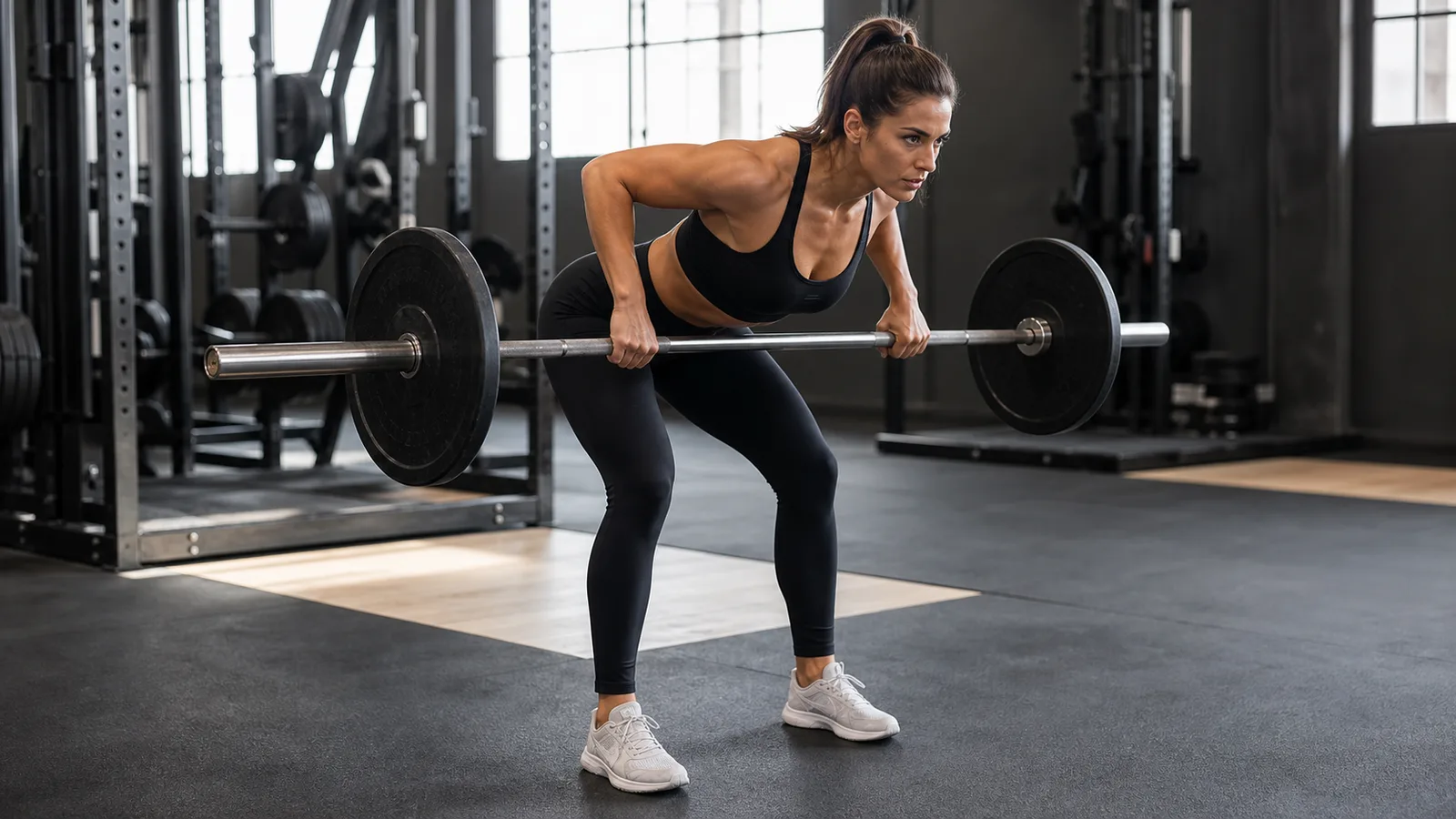
A wide-grip barbell row is a bent-over row performed with the hands farther apart than in a typical shoulder-width grip. The wider grip usually encourages the elbows to travel farther from the torso and shortens the bar’s range of motion. It can emphasize upper-back work, but it is not automatically better for building a wide back.
How to do a wide-grip barbell row
Stand with feet around hip width and take an overhand grip moderately wider than the shoulders. Hinge at the hips until your torso reaches an angle you can hold without rounding or excessive strain. Brace and let the arms hang straight.
Pull the bar toward the upper abdomen or lower chest while the elbows travel out from the body. Pause without shrugging, then lower until the elbows straighten. Keep the torso angle nearly fixed; a small natural movement is different from repeatedly standing up to throw the weight.
| Checkpoint | Useful cue | Common error |
|---|---|---|
| Grip | Wide enough for elbows to flare comfortably | Forcing an extreme hand position |
| Hinge | Push hips back and brace | Turning the exercise into an upright shrug |
| Bar path | Pull toward upper abdomen | Dragging toward the hips |
| Tempo | Lift smoothly and lower under control | Bouncing every repetition |
Muscles worked
The mid and upper back—including the trapezius, rhomboids, and rear shoulders—works to move and stabilize the shoulder blades. The latissimus dorsi and elbow flexors assist, while the spinal erectors, glutes, and hamstrings hold the bent-over position.
Grip width changes joint positions and range; it does not perfectly isolate one muscle. A shoulder-width row, pulldown, and supported row can all be part of a complete back program.
How wide should your grip be?
Start only a hand-width wider on each side than your normal row. Choose the position that lets your wrists stay comfortable and the elbows move without shoulder pinching. An extremely wide grip often reduces useful range and loading.
Mark the bar position or count the knurl rings so your setup stays consistent between workouts. Consistency makes changes in repetitions and load easier to interpret.
Sets, reps, and progression
Use two to four sets of six to twelve controlled repetitions. Because the bent-over position adds fatigue, start lighter than your standard row. Add repetitions first, then make a small load increase while preserving the same torso angle.
If your lower back limits the set before your upper back, a chest-supported row may be a more direct choice. The goal is to train the target muscles, not to prove that one variation is mandatory.
Wide-grip row alternatives
Choose an alternative based on the support and equipment you need. A cable or machine maintains tension without requiring the same hip hinge, while dumbbells allow each arm to find its own path.
- Chest-supported wide-elbow dumbbell row
- Wide-grip seated cable row
- Wide-grip machine row
- Face pull for lighter upper-back and rear-shoulder work
- Landmine row for a close-grip, heavily loadable alternative
Frequently asked questions
Are wide-grip rows better for upper back?
They can bias a higher elbow path and upper-back involvement, but “better” depends on comfort, technique, range, loading, and the rest of your program.
Why do I feel wide-grip rows in my lower back?
Your trunk muscles must hold the hinged position. Reduce the load, check your brace and torso angle, or use a chest-supported row if the lower back is the limiting factor.
This article provides general fitness information, not individual medical advice. Choose movements suitable for your ability and speak with a qualified professional when you have pain, an injury, or a health concern.
Sources
Jamie’s Fit uses authoritative health guidance to review general exercise recommendations.