
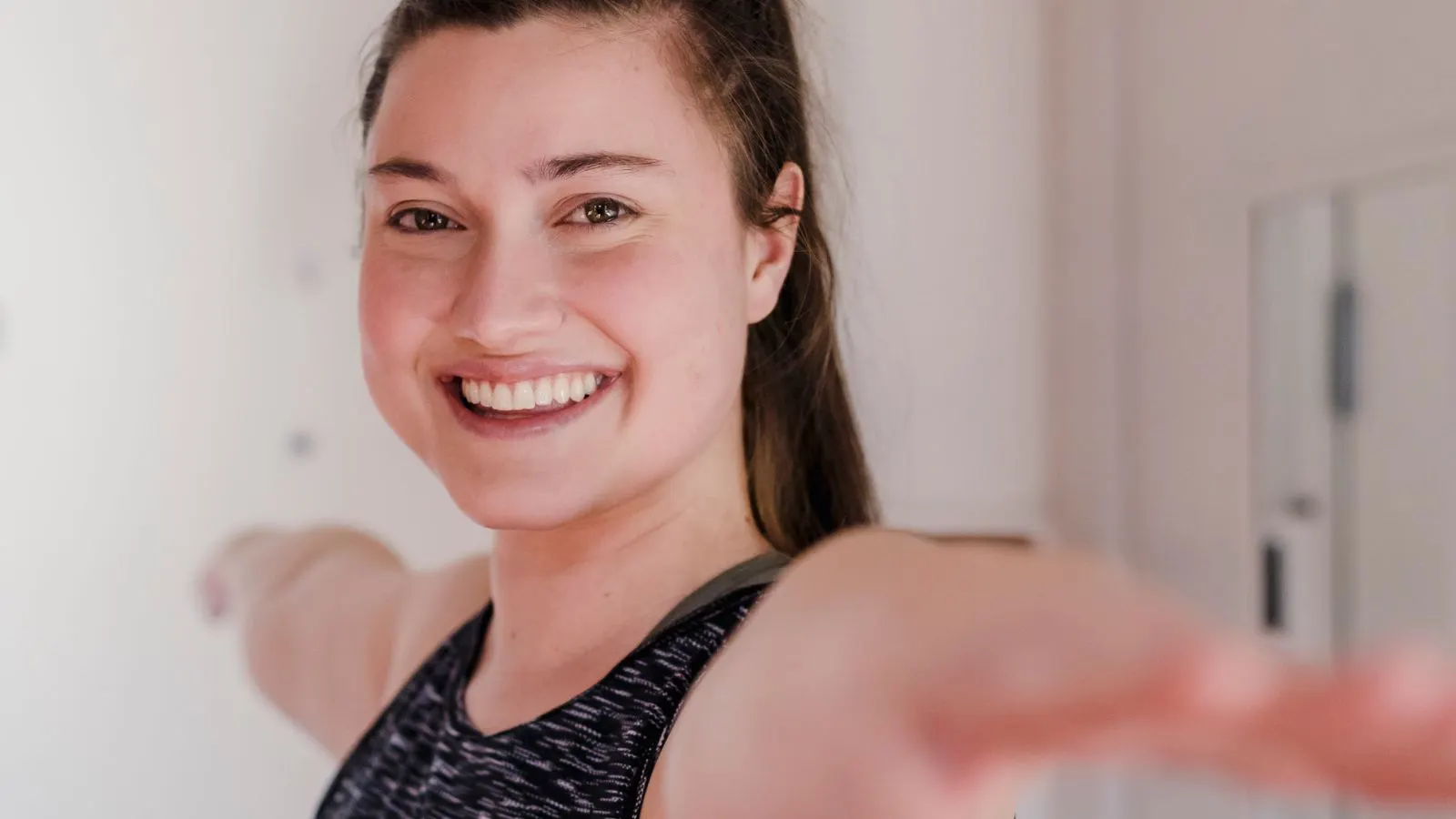
A 10-minute workout for beginners can be long enough to practice the habit, learn basic movements, and add meaningful activity to a busy day. This low-impact sequence uses no equipment and keeps every block simple. Move at a pace that lets you stay in control rather than racing the clock.
The 10-minute beginner workout
Set a timer for ten one-minute blocks. Move for about 40 seconds, then use the remaining 20 seconds to breathe and prepare for the next exercise. In the first two minutes, keep the pace deliberately easy so your breathing and heart rate rise gradually.
| Minute | Movement | Beginner option |
|---|---|---|
| 1 | Easy march in place | Hold a chair if needed |
| 2 | Step-touch with arm swings | Keep the steps small |
| 3 | Chair squat | Use your hands for support |
| 4 | Wall push-up | Stand closer to the wall |
| 5 | Alternating knee lift | Lift only as high as comfortable |
| 6 | Supported reverse step | Tap one foot behind you without bending deeply |
| 7 | Standing cross-body reach | Reach at shoulder height |
| 8 | Hip hinge | Practice with hands on your hips |
| 9 | Calf raise | Hold a chair for balance |
| 10 | Slow march and breathing | Reduce the pace gradually |
How hard should it feel?
Aim for light to moderate effort. During moderate activity, you should usually be able to talk even though your breathing is faster. If you cannot say more than a few words, slow down, reduce the range of motion, or take a longer break.
Ten minutes does not need to become high-intensity interval training to count. U.S. physical activity guidance emphasizes that any amount of activity can provide benefits, especially when you are building from an inactive starting point.
Notice your balance, breathing, and any discomfort. Swap an exercise or stop the session if a movement does not feel right for you.
Turn it into a 15-minute beginner workout
If you have five more minutes, repeat minutes three through seven. Keep the same exercise versions rather than making them harder just because the workout is longer. You can also use the extra time for a longer gradual warm-up and cool-down.
On another day, repeat the original ten-minute sequence instead. Frequency and repeatability matter more than squeezing every possible minute out of one session.
How to make the routine easier or harder
To make it easier, work for 20 to 30 seconds, rest for the rest of the minute, and choose smaller ranges of motion. To add challenge, work for 45 to 50 seconds, move a little more briskly, or repeat the circuit. Keep the movements controlled.
- Use a wall, chair, or counter for balance
- Replace squats with sit-to-stands from a higher chair
- Keep one foot on the floor instead of adding hops
- Take a full minute of rest whenever you need it
- Repeat the same version until it feels familiar
Where this workout fits in your week
Use this routine on a busy day, as a low-pressure starting point, or between longer workouts. As your capacity grows, combine short sessions with two weekly strength days and additional moderate aerobic activity. Build up gradually rather than trying to reach a full weekly target immediately.
Frequently asked questions
Is a 10-minute workout enough for a beginner?
It is a useful starting point. Short sessions can help you practice movements and build a routine. Over time, gradually add activity according to your goals, ability, and health needs.
Can I do this 10-minute workout every day?
The sequence is designed as light-to-moderate general movement, but your recovery and health context still matter. Vary your activity, use easier options when needed, and take a rest day if you feel unusually sore or tired.
Does the workout require jumping?
No. Every movement keeps at least one foot on the floor and can be made smaller or slower.
This article provides general fitness information, not individual medical advice. Choose movements suitable for your ability and speak with a qualified professional when you have pain, an injury, or a health concern.
Sources
Jamie’s Fit uses authoritative health guidance to review general exercise recommendations.