
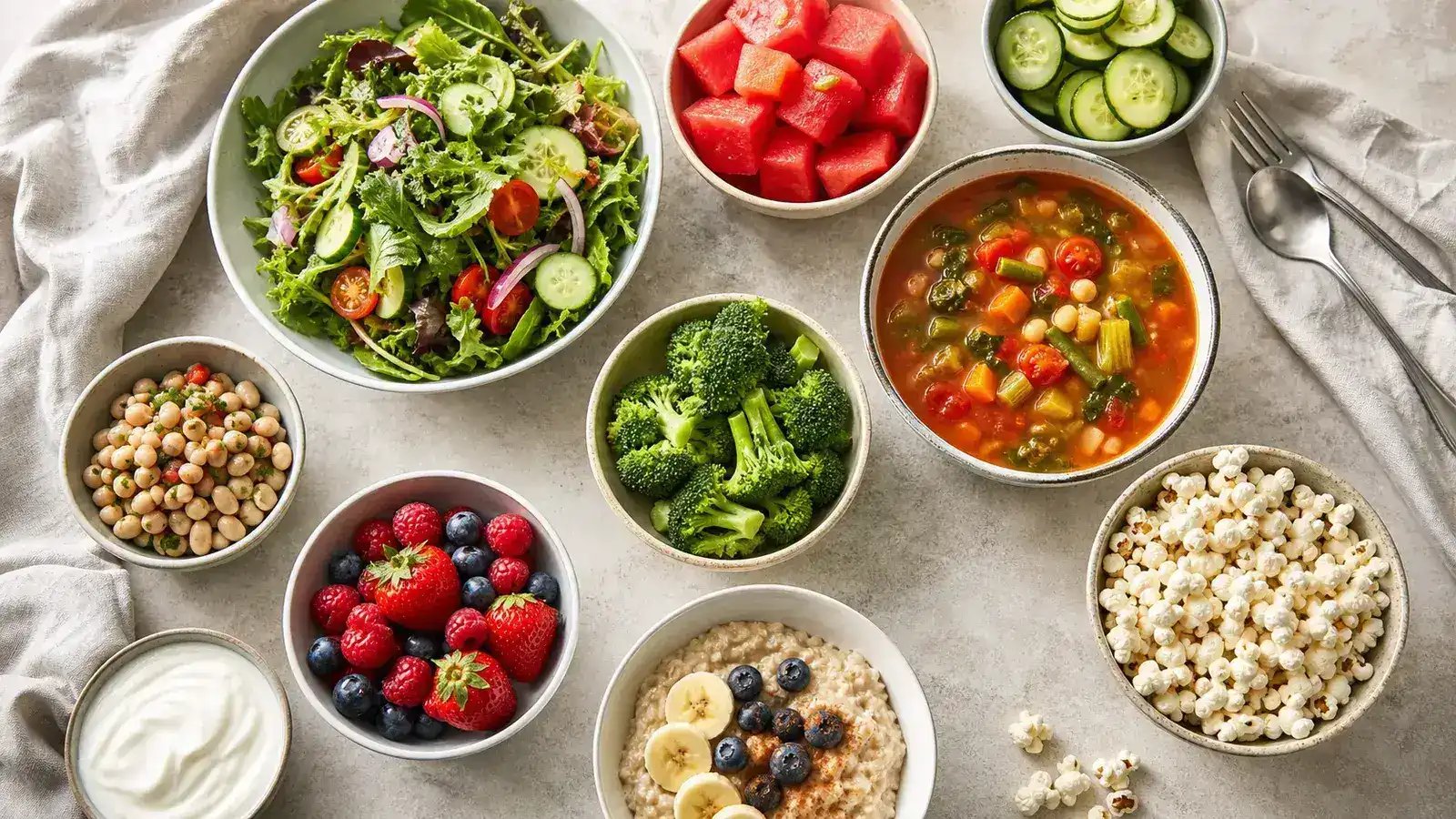
High-volume, low-calorie foods provide a relatively large portion for fewer calories, often because they contain plenty of water and fiber. They can make a calorie-aware eating pattern feel more substantial, but “low calorie” is not the same as nutritionally complete. Build meals with produce, protein, satisfying carbohydrates, and some dietary fat rather than trying to live on giant bowls of lettuce.
What makes a food high volume?
Energy density describes calories relative to the weight of a food. Water adds weight and volume without adding calories, while fiber contributes bulk and can slow eating. That is why many fruits, vegetables, and broth-based dishes provide more food volume than dry snacks or foods with lots of added fat.
The CDC recommends substitution: use lower-calorie produce in place of some higher-calorie ingredients rather than adding it on top of everything you already eat. Preparation matters because frying, creamy sauces, syrups, and large amounts of oil increase energy density.
35 high-volume, low-calorie foods
Calories vary by variety, ripeness, brand, portion, and preparation. Use the list as a shopping guide, then check the package or a reliable food database when exact numbers matter.
| Group | Foods | Easy use |
|---|---|---|
| Leafy vegetables | Lettuce, spinach, cabbage, kale, arugula | Salads, wraps, soups, stir-fries |
| Crunchy vegetables | Cucumber, celery, radish, bell pepper, carrots | Snacks, bowls, dips, slaws |
| Cooked vegetables | Broccoli, cauliflower, zucchini, mushrooms, green beans | Roast, steam, or add to pasta |
| High-water fruit | Watermelon, strawberries, oranges, grapefruit, peaches | Snacks, yogurt, dessert |
| Whole fruit | Apples, pears, grapes, blueberries, kiwi | Portable snack or oatmeal topping |
| Broth-based foods | Vegetable soup, chicken soup, lentil soup, miso soup | Starter or meal with protein |
| Lean protein foods | Greek yogurt, cottage cheese, egg whites, white fish, chicken breast | Anchor a meal or snack |
| Fiber-rich staples | Oatmeal, beans, lentils, air-popped popcorn | Breakfast, bowls, soups, snacks |
Turn the list into filling meals
A useful plate includes more than volume. Add a clear protein source and a carbohydrate you enjoy, then use vegetables or fruit to expand the meal. Dietary fat adds flavor and helps absorb certain nutrients, so measure calorie-dense additions when you are tracking rather than eliminating them.
- Breakfast: oatmeal cooked with extra water, berries, Greek yogurt, and nuts
- Lunch: chicken or tofu grain bowl with cabbage, cucumber, peppers, and salsa
- Dinner: lean chili with beans, tomatoes, peppers, and a baked potato
- Snack: fruit with cottage cheese, yogurt, or a measured portion of nut butter
- Dessert: frozen berries with yogurt or fruit blended into a thick smoothie bowl
Low-calorie swaps that still feel like a meal
Replace part—not necessarily all—of a calorie-dense ingredient. Mix cauliflower with rice, add zucchini and mushrooms to pasta sauce, or replace some noodles in soup with vegetables. Keeping a familiar base can make the result more satisfying than an extreme substitution.
Whole fruit is generally more filling than juice because it retains fiber and requires chewing. Frozen and canned produce can be convenient choices; look for fruit packed without syrup and vegetables without creamy sauces when the goal is lower energy density.
People with low appetite, unintentional weight loss, high energy needs, or some digestive conditions may need more energy-dense foods, not fewer. Individual nutrition advice belongs with a registered dietitian or clinician.
Common volume-eating mistakes
A giant low-calorie meal can still leave you unsatisfied if it lacks protein, carbohydrate, fat, or foods you genuinely enjoy. Another common problem is ignoring sauces, dressings, and cooking oils while focusing only on the base ingredients.
Calorie counting can also become stressful or rigid. If food tracking increases anxiety, guilt, bingeing, or compensatory exercise, stop and seek support from a qualified eating-disorder-informed professional.
Frequently asked questions
What foods can I eat a lot of for few calories?
Non-starchy vegetables, many whole fruits, and broth-based soups are common high-volume options. Add protein and other food groups so the overall meal is nutritionally balanced and satisfying.
Is popcorn a high-volume food?
Air-popped popcorn can provide a large volume because it expands during popping. Oils, butter, sugar, and large toppings can substantially change its calorie content.
Can high-volume foods help with weight loss?
They can make a calorie deficit easier for some people, especially when they replace more energy-dense foods. Weight change still depends on the overall eating pattern, activity, health, and consistency.
This article provides general fitness information, not individual medical advice. Choose movements suitable for your ability and speak with a qualified professional when you have pain, an injury, or a health concern.
Sources
Jamie’s Fit uses authoritative health guidance to review general exercise recommendations.